This post looks at how to properly store old magazines to preserve them. We offer tips for extending the life of magazines in your collection. We also have a video on this topic called How to Safely Store Old Newspapers & Magazines in Archival Boxes.
Storing Paper Items
Most items made with paper – books, magazines, newspapers, photos, postcards, letters, etc. – are not made with archival grade paper because of the high cost of making archival paper. There are a range of paper qualities, with newsprint being the cheapest and most susceptible to breaking down quickly, especially when not stored well.
Yellowing of newsprint and old paperbacks is obvious, but you can often see subtle yellowing around the edges of higher quality book pages and postcards if you look closely. If you want to slow down the rate of deterioration, proper storage of paper items is important.

First, a Look at How Not to Store Your Magazines
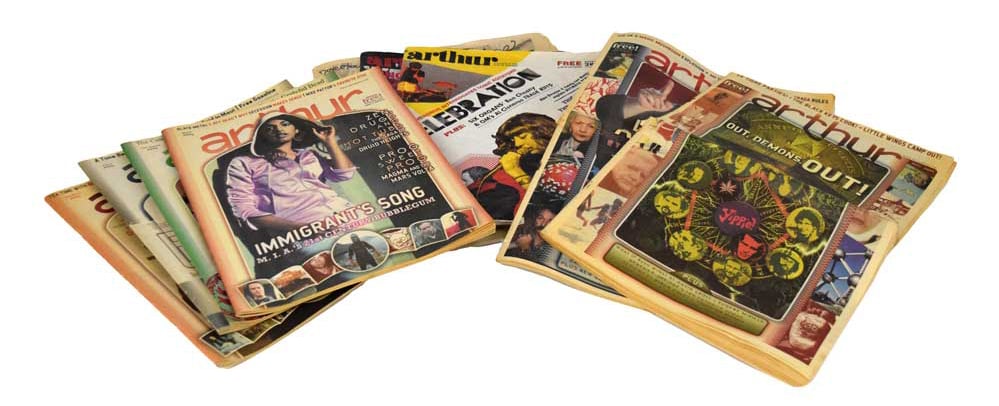
The above photo shows a variety of different magazines stored in an inexpensive cardboard magazine box from Ikea. The box is over twenty years old and these magazines have been stored inside it up in my attic for almost that long. These boxes are great for organization and display of magazines, notebooks, and such. But they were never meant for long-term preservation because they are made of acidic, non-archival cardboard, and they leave the magazines exposed to light, air, and dust. Learn more about Agents of Deterioration that threaten your collections.

The magazine holder above was made with non-archival cardboard, was in long-term contact with acidic paper (the magazines), and in a hot, humid attic. All of these factors contributed to the acid-burn that is visible.
Most standard papers and cardboards have some degree of acids and lignins in them because removing these elements during production is expensive. Newsprint is the classic example of cheap paper that can rapidly break down, yellow, and become brittle. This degradation is accelerated by exposure to heat, humidity, light, and pollution.
Steps for Archival Storage

First, you need to gather together all the magazines or journals that you want to preserve, and measure their dimensions. This will let you figure out the width and length of the box that you will need. Even if your collection is all the same publication, the issues might be different sizes if they changed their format along the way.
The 3″ Drop Front Boxes are good for storing magazines. You will also need to measure the height of the stack of magazines to determine how many boxes you will need.

This group of publications ended up fitting inside our smallest Newspaper & Magazine Kit (63-912-GY). This kit features a Drop Front Box that is 9-1/2 x 12-1/2 x 3″ deep. It comes with ten Polyethylene Bags and, like all of our kits, a Label Holder for the box.
Layers of Protection
While it would be fine to just stack the magazines inside the archival box, the poly bags are an added layer of protection. They protect the magazines from each other. It is also another barrier against agents of deterioration, such as insects and water.
An alternative to plastic would be to use archival paper as interleaving between the magazines. Buffered or unbuffered are both fine but a buffered paper would add extra acid-scavenging properties. All of our boxes are buffered so that property is built into the storage environment.

Don’t Put Them Back in the Attic!
Once you’ve put the magazines into the archival poly bags and inside the drop front box, it’s time to label the box and find a good place to keep it.

Remember, don’t store paper items that you want to preserve in attics, basements, or garages. The above photo shows a large quantity of Metal Edge Boxes being stored inside a metal cabinet with shelves. This is a great storage option because it is essentially another layer of protection and metal shelves are ideal.
Even if you don’t have something like this you can store your archival boxes on closet shelves or bookshelves. Make sure they are not exposed to direct sunlight.
The one thing wrong with the above photo is that there are no labels on the boxes! It could take a long time to find what you are looking for in this scenario.

We offer Adhesive Back Vinyl Label Holders that you can use on our boxes and binders. They are available in four sizes and come in packages of twenty. All of our kits include a 3-3/4 x 1-3/4″ label holder like the one above. They come with our archival Card Stock inserts. Use an archival pen or classic pencil to write your labels. If you’d prefer a printed label, we have PDF templates under the Resources tab on the label product page.
Contact us if you have questions about archival storage or our products. We are happy to help!
