[Updated: October 8, 2025]
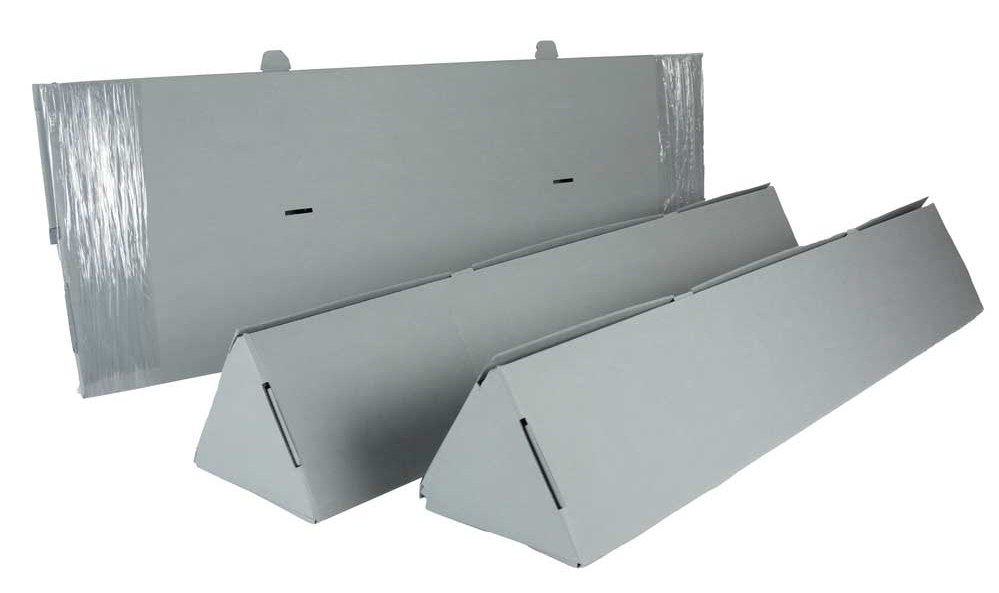
Archival-quality corrugated Triangular Roll Storage Boxes provide safe, acid-free and lignin-free storage for maps, prints, drawings, blueprints and other rolled items, as well as other long artifacts in your collection or archive. [See the second half of the How to Archivally Store a U.S. Flag blog post)
Storing rolled items (posters, prints, maps, large artworks on fine artist papers, etc.) can be a challenge! First, you need to roll the item up just right to fit into whatever size tube you are using. If it’s not rolled tightly enough to fit inside the tube, you have to re-roll it even tighter – increasing the likelihood of damage – or try to tighten it up by pulling on the edges of the core.

Then, just try and take your rolled item or artifact out of the tube. It’s usually difficult and often results in damaging the stored item along the edges and creating dents in the paper.
Additionally, that tube you’re planning to use that you picked up at an office supply store, post office, box shop, or had floating around your home or office – well, I can pretty much guarantee that it is not acid-free.
So, if the general idea of placing a valued rolled item in a tube is based on protecting and preserving it, well, your heart is certainly in the right place but your rolled item isn’t!
Introducing the Triangular Roll Storage Box
The design of the Triangular Roll Storage Box minimizes the kinds of damage that can be caused by storing your rolled artifacts in tubes. This easy-to-open design makes placing and removing your rolled object much easier and safer. It reduces the possibility of causing a wrinkle when handling the rolled item.

As an added benefit, the triangle sides of this box means it will not roll off your work surface, desk, or table, and it stacks more easily than a tube.

Made with Museum-Quality Materials
Archival Methods’ Triangular Roll Storage Box is made from acid-free, lignin-free, E-Flute archival corrugated board – which exceeds 200 lb. strength tests – with a 3% calcium carbonate buffering to minimize potential acid migration from your rolled item.

Storing Blueprints
Since these boxes (and all our boxes) are buffered with calcium carbonate, if you plan to store architectural or other blueprints in them it is important that the blue side is rolled inward to prevent contact between the cyanotype image surface and the buffered walls of the box.

Pro Tip: To keep your rolled item rolled for easier handling while placing them in these convenient storage boxes, consider rolling them up and then wrapping them in a band or full sheet of acid-free Archival Paper that is taped closed with a piece of archival Filmoplast P-90 Tape. This will keep your poster / map / artwork rolled for easier handling, and no adhesive will come into contact with the item itself. Just slide this band or sheet of acid-free paper off your item for easy access / carefully slide it back on again when you’re finished.
Contact Us
If you have any questions or would like more information on any of our museum-quality archival storage and presentation materials, please contact us here at Archival Methods. We’re always there to help with any archiving, storage, or presentation questions you may have.
