How to...
Avoid Deterioration of Your Collection
Deterioration occurs when an item or object changes in a diminishing way that impairs its quality, character or value. If a collection of family photos, monetary one of kind prints, or other collected works are not properly preserved and stored there is a high chance, an unlucky chance, the items will deteriorate over time.
Five environmental factors that can impact the overall condition collection are listed below.
- Temperature – It is best to keep the temperature of the storage area within the “human comfort zone”. A cool temperate room is recommended within a home or office. (Avoid storing your collection it attics, garages and basements where extreme temperature changes are more apt to occur.)
- Humidity – The recommended level of relative humidity (amount of water vapor in the air expressed as a percentage of the maximum amount that the air could hold at the given temperature) is 50%. In conjunction with high temperatures, high humidity will initiate and accelerate chemical reactions. These chemical changes can result in discoloration, brittleness, and fading of materials such as textiles and photographic prints. High humidity can also increase the chance of mold and mildew growing around and within your collection. Mold and mildew grow quickly and cause irreversible damage.
- Pollutants – These include a broad range of substances or other items that initiate and/or accelerate chemical reactions or additional risks of damage. Pollutants include; but are not limited to dust, smoke, fumes (from cleaning products or newly painted walls), acids found in improper storage materials and adhesive products such as glues and tapes. Clean storage areas, good ventilation and acid-free storage materials will reduce the risks contributed by pollutants.
- Pests - Insects, especially, thrive in environments with high relative humidity and moderate temperatures. Frequent, periodic inspections are the best way to monitor for pests turning your collection into their home. If a problem is detected early on, it is very possible your collection can be saved.
- Light Exposure – Direct sunlight can cause objects to fade and discolor images over time. If photographs and documents are going to be displayed it is best to use an UV filtering acrylite or similar product that will protect them from the harms of the rays. Extremely fragile items should be kept out of direct contact with light of any kind and stored properly in acid-free sleeves in archival quality boxes.
Deterioration can be caused by any of the above factors. In order to protect your collection from damage; it is important to properly store the collection and monitor its environment periodically.
Image Permanence Institute; www.imagepermanenceinstitute.org
Local Archiver; http://www.localarchiver.com/
Tip: A Solution for Shipping a Single Print
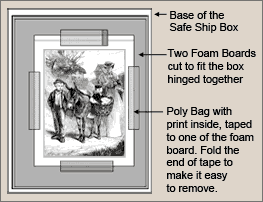
There are times when you may have to ship only one print. It can become a challenging task,
since you want the print to arrive undamaged to its final
destination while maintaining a sense of professionalism.
Term: Lignin
An acid organic substance found in wood pulp. It is removed in
the chemical pulping process, but is not removed in the
manufacturing of low grade papers, such as newsprint. Lignin free
products aid in preserving photographs, documents, textiles and
other materials.
Questions & Answers:
If you have any questions, please feel free to e-mail them to [email protected] or visit us on Twitter, FaceBook or LinkedIn.
Q: For years I have used non buffered acid free rag mat board to mount my color photographs (type C prints). Is there a reason you do not sell non buffered board?
A: We do not stock non buffered rag board. Current ISO standard 18902 calls for buffered board and paper will all photographic and ink jet materials. The only exceptions are cyanotypes and protein based textiles.
Non buffered board will not cause any harm to your photographs but it will over time shift to the acidic side of the pH scale as it is exposed to the environment and pollution. Once it reaches the high side of the pH scale it is recommended to replace the board.
We have decided to only sell products that conform to ISO standards. Our buffered museum (100% cotton fiber) and conservation (alpha-cellulose pulp from purified wood fiber) boards are acid & lignin-free and use alkaline or neutral sizing. Both are buffered with calcium carbonate. This ensures protection from destructive effects of polluted environments that can cause the pH of paper to decrease with age. |

 RSS
RSS Translate


 Follow us on Twitter
 Become a fan
 Join us on Linked-In
 New RSS feed
 Forward to a Friend